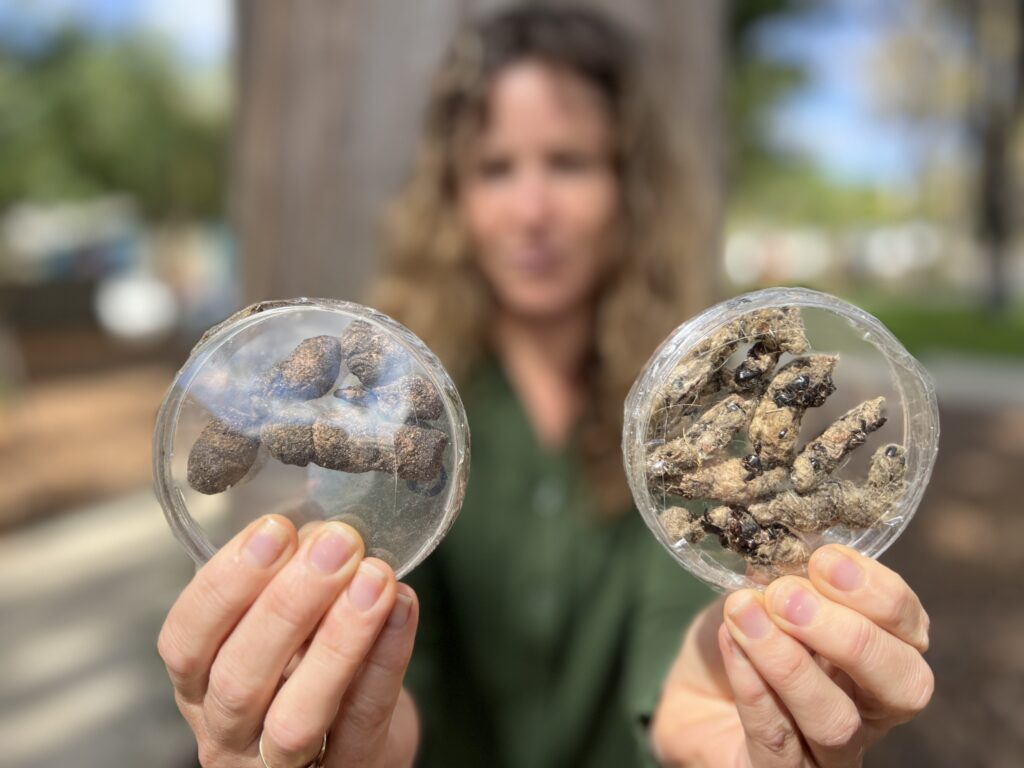
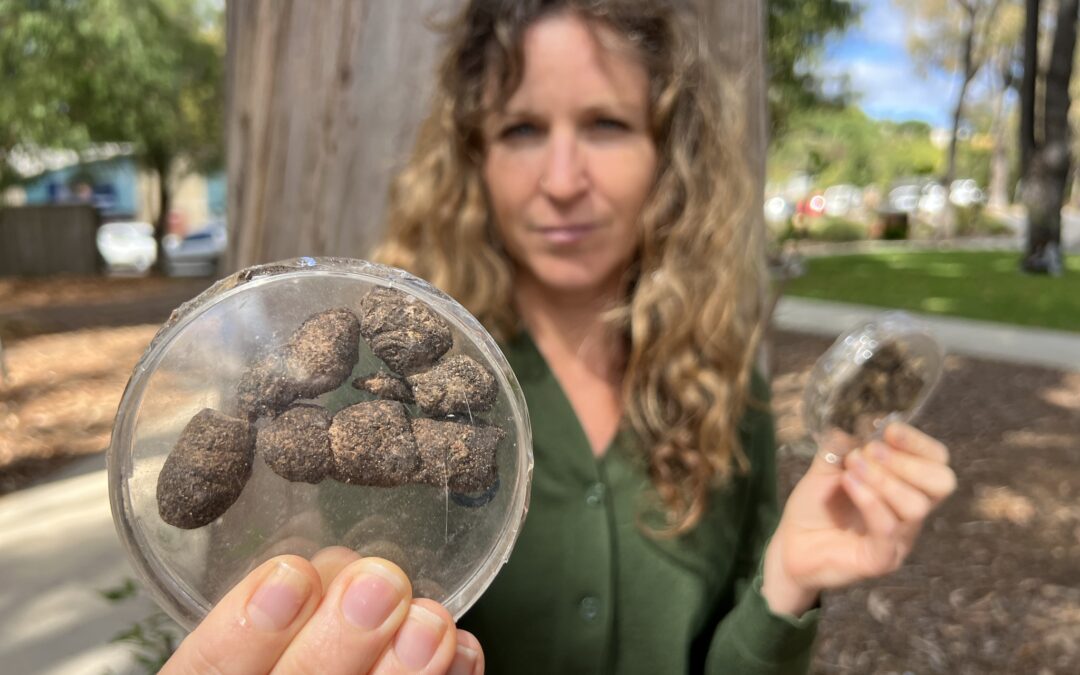
Residents are being invited to take part in an unusual citizen science project to help protect wildlife on Cape Naturaliste — by collecting fox and feral cat scats.
The Cape Naturaliste Conservation Enterprise (CNCE), in partnership with Nature Conservation Margaret River Region and Friends of Meelup, has launched a new environmental DNA (eDNA) project that will analyse predator poo to better understand the impacts of feral animals on the cape’s native fauna.
Despite the region’s rich biodiversity, there have been few formal surveys of native fauna and feral predators on Cape Naturaliste. Conservation groups say more data is needed to ensure protection efforts are targeted and effective. The project will partner with researchers at Curtin University’s eDNA Frontiers laboratory, where scientists will analyse scat samples collected by volunteers using advanced DNA techniques.
CNCE officer Mandy Polley said the project brought together community involvement and cutting-edge science. “This is such an exciting project. We are combining citizen science, where any interested person can get involved, with high-tech molecular biology to find out what feral cats and foxes are eating on the cape,” Ms Polley said.
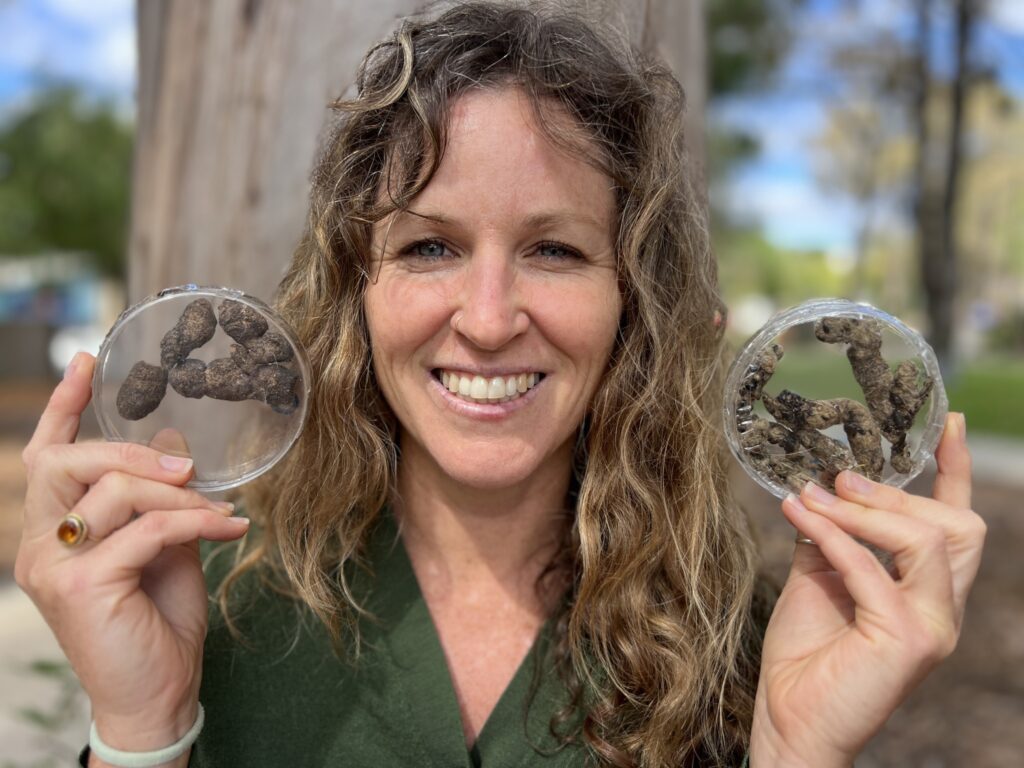
Cape Naturaliste Conservation Enterprise officer Mandy Polley with feral cat and fox scat
“It’s especially exciting to be doing this work in a place as special as Cape Naturaliste. Using eDNA methods to understand what cats and foxes are doing in the landscape is a powerful approach that has been demonstrated in research.”
Environmental DNA, or eDNA, refers to the genetic material organisms leave behind in the environment. By analysing DNA traces in predator scats, scientists can identify the animals that have been eaten — providing insights into predator diets and the wildlife present in the area.
Curtin University’s eDNA for Global Environment Studies program manager Shane Herbert said the technique was proving to be a valuable tool for monitoring ecosystems.
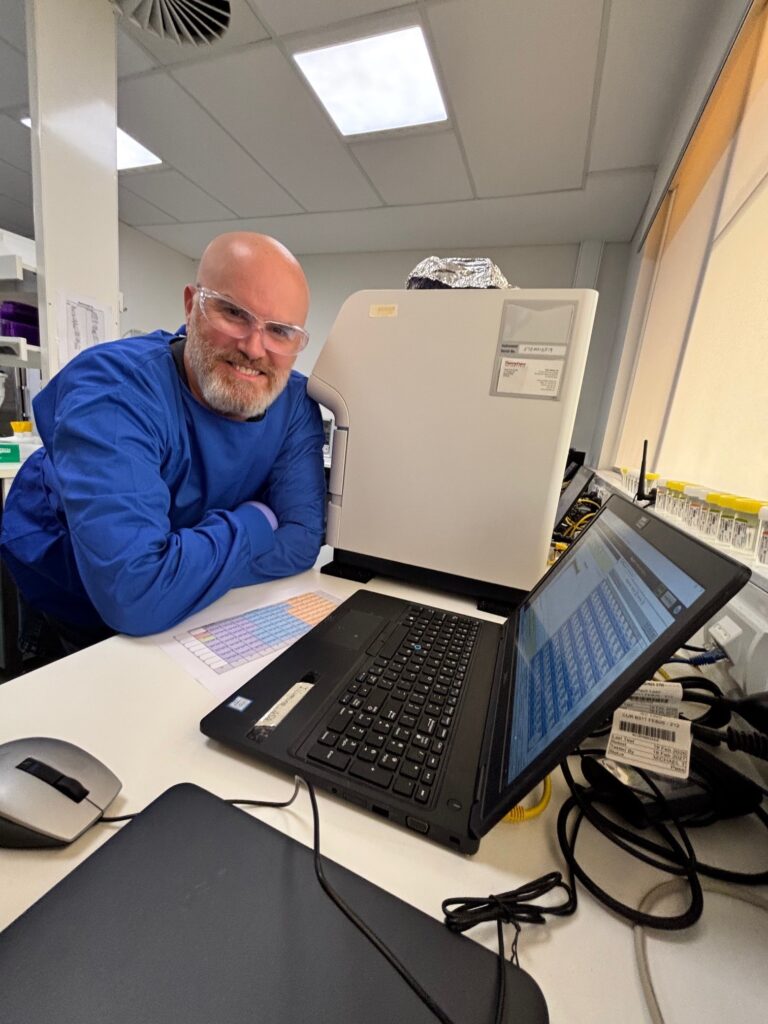
Researcher Shane Herbert will be using eDNA techniques in the lab as part of the project
“We’ll be using a relatively new scientific method that makes use of environmental DNA, which is essentially the genetic material organisms leave behind when they move through an ecosystem, or in this case, are eaten by a predator,” Mr Herbert said. “By analysing the DNA in these scats we can identify the different species present, allowing us to build a picture of what foxes and feral cats are eating and how they are interacting with local wildlife.”
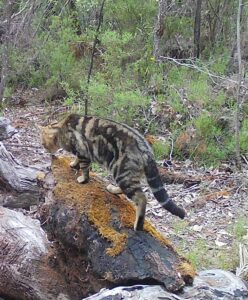
A feral cat caught on a monitoring camera
Community volunteers — known as “Scat Trackers” — will receive sampling kits and instructions, then collect fox and cat scats from across Cape Naturaliste. The samples will be frozen and sent to Curtin University for laboratory analysis.
The information gathered will help identify whether threatened or conservation-significant species are being impacted by feral predators and guide future conservation and funding priorities.
Ms Polley said the project showed how new scientific tools could support practical conservation on the ground. “This project is a great example of how new technology can help answer important conservation questions and provide information that supports better protection of our local wildlife,” she said.
Landholders and community members interested in becoming Scat Trackers can register their interest the Cape Naturaliste Conservation Enterprise webpage.
The Cape Naturaliste Conservation Enterprise is delivered in partnership with Nature Conservation Margaret River Region and Friends of Meelup with funding from the WA Government’s State Natural Resource Management Program, and Line in the Sand as a major donor.