
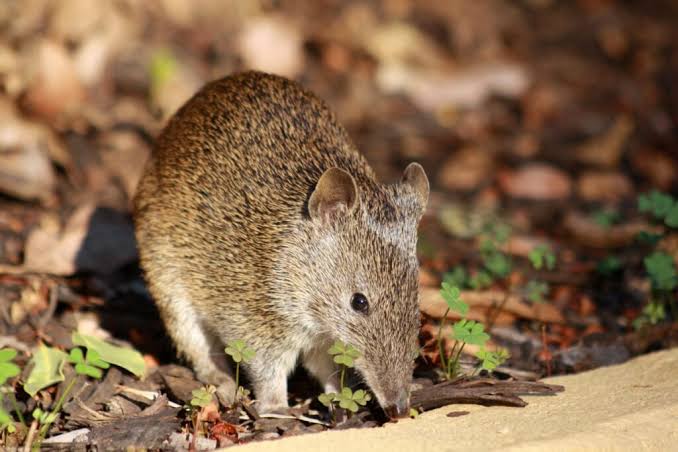
With spring approaching and properties beginning to come alive after winter rains, Nature Conservation Margaret River Region is encouraging landholders across the South-West to book a biodiversity assessment to better understand the native plants, animals and habitats on their land.
The service draws on more than 25 years of regional natural resource management experience and has already been delivered across a wide range of properties, including dairy farms, vineyards and lifestyle blocks.
Nature Conservation staff visit your property to identify native species, assess habitat condition and provide practical, plain-language advice tailored to the landholder’s goals and budget. Assessments can range from a concise property snapshot through to a comprehensive technical report, depending on the level of detail required.
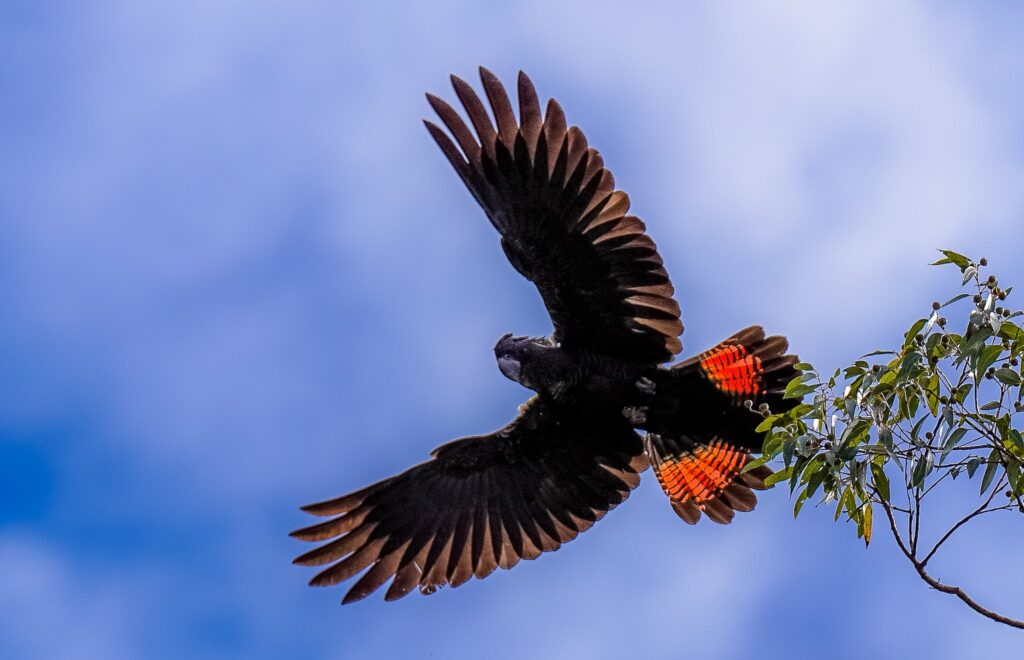
Forest red tailed black cockatoo are a favourite local species
Nature Conservation’s program manager Cass Jury said many landholders were surprised to discover the ecological value already present on their properties. “People often know they have patches of bush or wildlife on their property, but these assessments help them understand exactly what’s there, why it matters and what practical steps they can take to improve and protect it,” she said.
“The advice is designed to be practical and achievable, whether someone has a one-hectare lifestyle property or a large farming enterprise. The assessments are designed to deliver not only conservation outcomes, but also long-term on-farm benefits.”
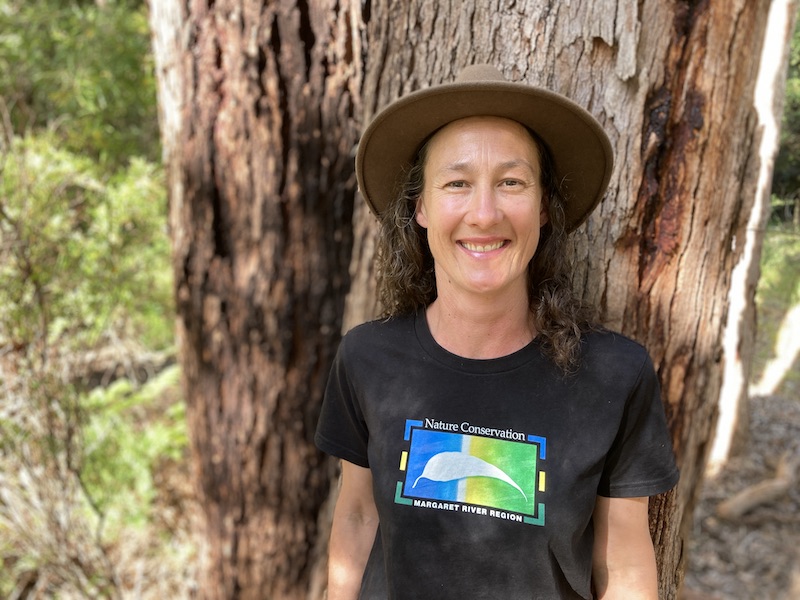
Nature Conservation programs manager Cass Jury
Landholders receive advice on how improving native vegetation can provide better shade and shelter for livestock, improve water quality in dams and waterways, reduce soil erosion and strengthen overall property resilience.
Each assessment is structured around three key elements:
- A property visit by qualified staff to record native species, habitats and condition
- Plain-language management advice tailored to the property
- A written report — from a concise summary to a full technical document — suited to the landholder’s goals and budget
Margaret River vineyard owner Brent Carter from Idee Fixe said the assessment process had provided a clear and achievable pathway forward. “The report looks great and the actions are logical, reasonable and a great starting point to get us moving forward,” he said.
Iconic winery and vineyard Cape Mentelle is also working closely with Nature Conservation, including bringing in the conservation group to do a biodiversity assessment on the Margaret River property, harvesting olives to prevent the seed being spread, maintaining their local section of the Cape to Cape Track, and controlling weeds and restoring their creek line. “One of the real positives of getting the biodiversity assessment is the list of recommendations and knowing what to prioritise,” said Cape Mentelle chief of winemaking and viticulture David Moulton.
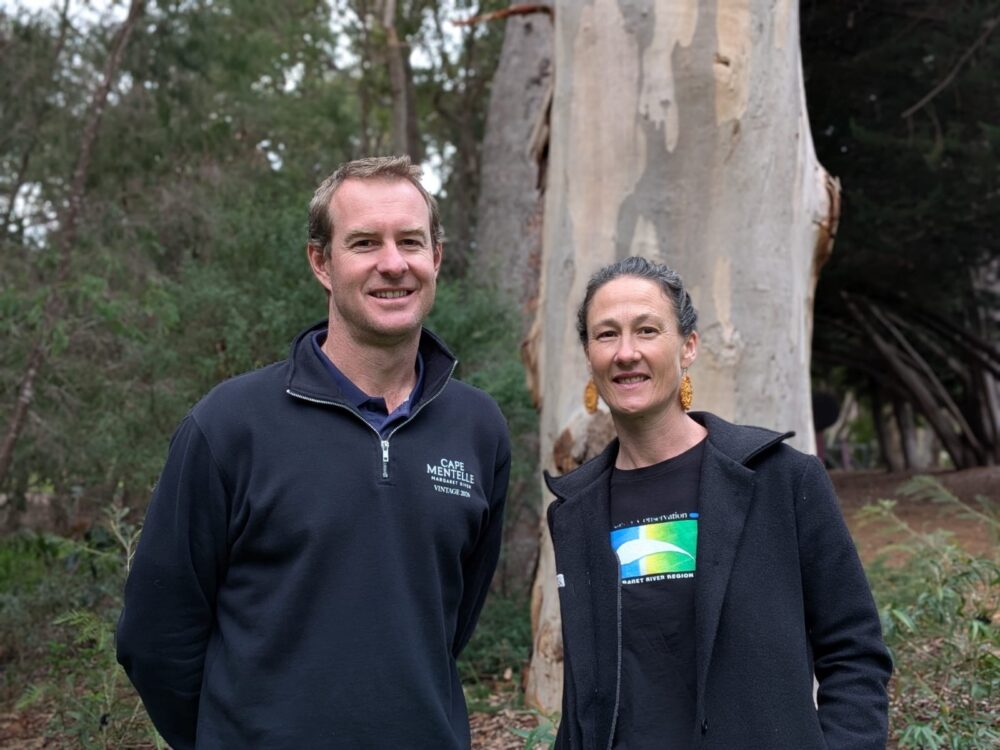
Cape Mentelle’s David Moulton with Cass Jury during a biodiversity assessment
“We can choose within budget how much to do in year 1, year 2 and year 3. You can prioritise the actions relative to the spend. The fact is we all live here because we love it, and we need to start looking after and maintaining our own backyard.”
Biodiversity assessments are available for properties ranging from small lifestyle blocks through to large broadacre farms. Nature Conservation is encouraging interested landholders to book assessments ahead of spring, when native vegetation and wildlife activity becomes more visible across the landscape. Click here for more information or to book a property assessment.