
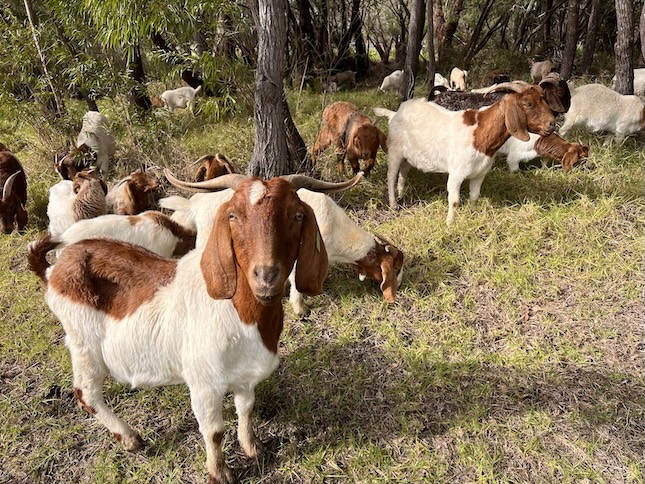
A herd of happy goats is helping tackle blackberry, kikuyu and woody weeds at Island Brook Estate, as the wine producers begin an ambitious project to boost the health and biodiversity of their farm dams and catchment.
Owners Paul and Jill O’Callaghan bought the property north of Cowaramup three years ago and are determined to tackle the environmental challenges they inherited, while building a more resilient and biodiverse farm for the future.
“It’s a big job, and we know it’s not going to happen overnight,” Jill said. “But we want to be good custodians of this property and leave it in better condition than we found it. It’s about taking it step by step and doing what we can for the land, the waterways and the wildlife.”
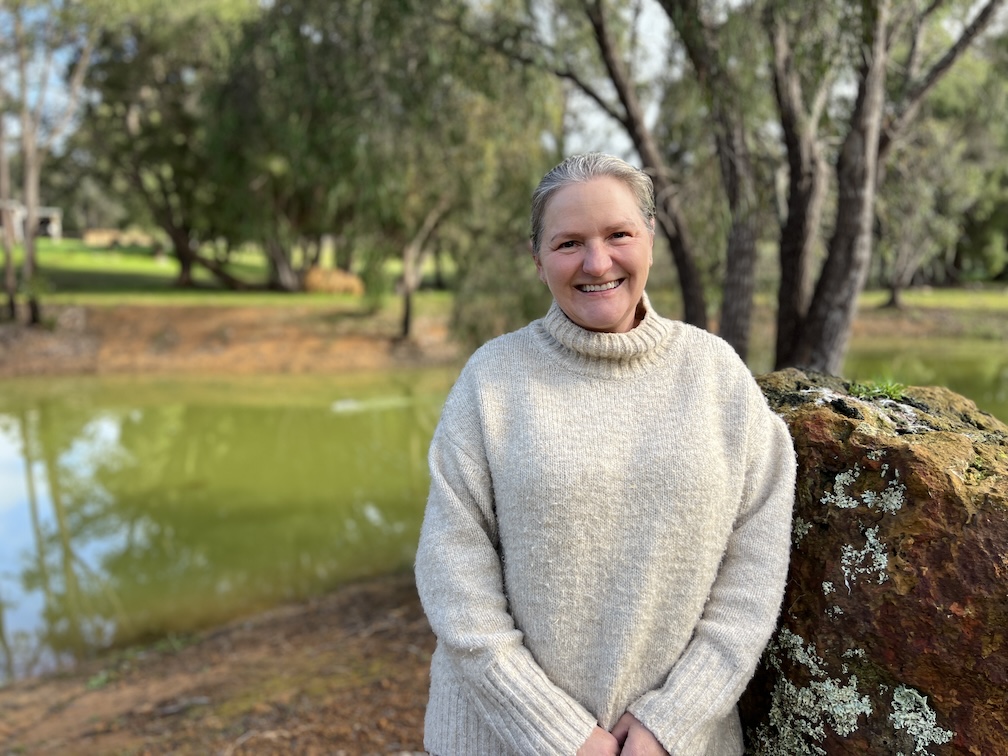
Jill O’Callaghan from Island Brook Estate with one of the property’s dams
Turning dams into biodiversity havens
The restoration work is being delivered in partnership with Nature Conservation Margaret River Region as part of the Western Australian Wine Sustainability Advancement Program (WAWSAP).
The project will investigate ways to restore the two dams as biodiversity havens, improve water quality and vegetation, and enhance the health of the Island Brook catchment, which flows through the property. As part of their regenerative approach, Island Brook Estate is also trialling targeted grazing using goats supplied by local business Earth Shepherd, founded by Sam Maisey to help landholders regenerate bushland and agricultural properties.
The goats are being used in short, controlled periods to target dense blackberry, kikuyu and woody weeds, which the goats love to eat.
“Through careful, planned grazing, we use high intensity numbers (of goats) for a very short period of time, and then allow the system to rest, other species to establish, and native plants to grow back to full maturity – which is important for biodiversity,” Sam said. He added that, unlike using herbicide to control weeds, carefully integrated livestock management “nourishes the ecosystem processes” and “works with nature instead of against her to create abundance and biodiversity”.
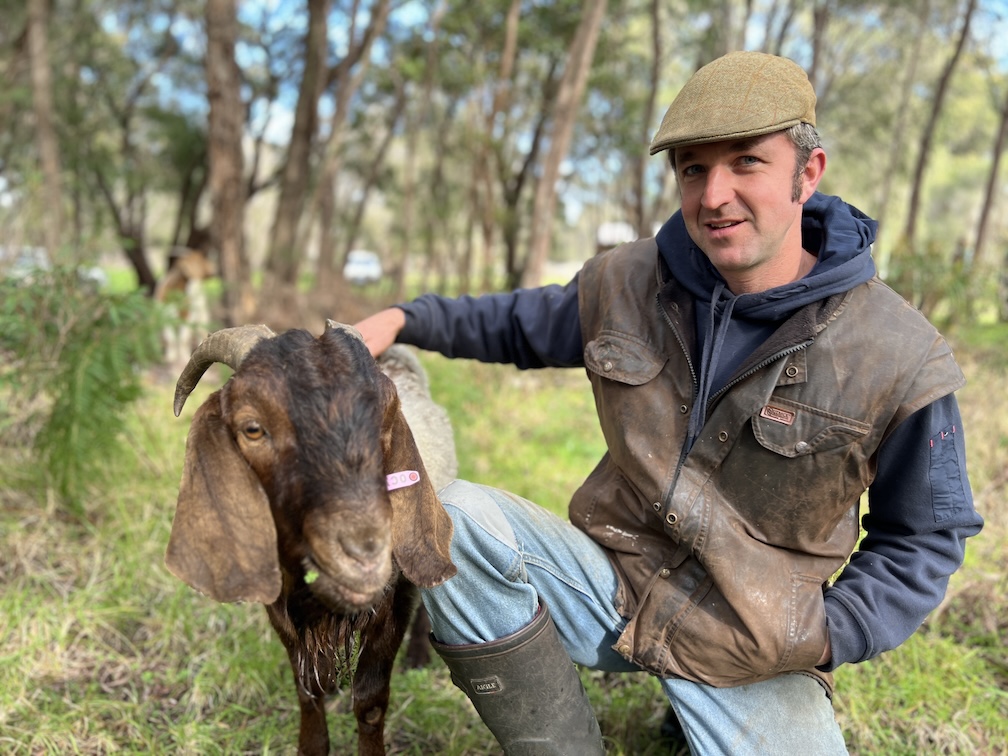
Sam Maisey uses a herd of goats to tackle invasive weeds at Island Brook Estate
Another tool for tackling weeds
Nature Conservation’s project coordinator Ellie Ward said the grazing trial was an exciting opportunity to explore another tool for tackling difficult weed problems, while stressing that it was not a one-size-fits-all solution.
“We’re really interested to see how the goats perform at Island Brook and what we can learn from the trial,” Ellie said. “Managed grazing won’t be appropriate for every site. It may be particularly useful on highly degraded areas where there are major weed infestations and where conventional control is difficult. The important thing is that we’re trialling it carefully and learning from the results, and then sharing the results with other landholders.”
The wider restoration project includes ecological assessment, weed control, rehabilitation of riparian areas and planning for native revegetation around the dams and waterway. Ellie said the project was about looking at the whole system rather than treating the dams in isolation.
“Healthy dams and waterways can provide important habitat for frogs, birds, insects and other wildlife, while healthy riparian vegetation helps protect water quality and build resilience in a drying climate,” she said.
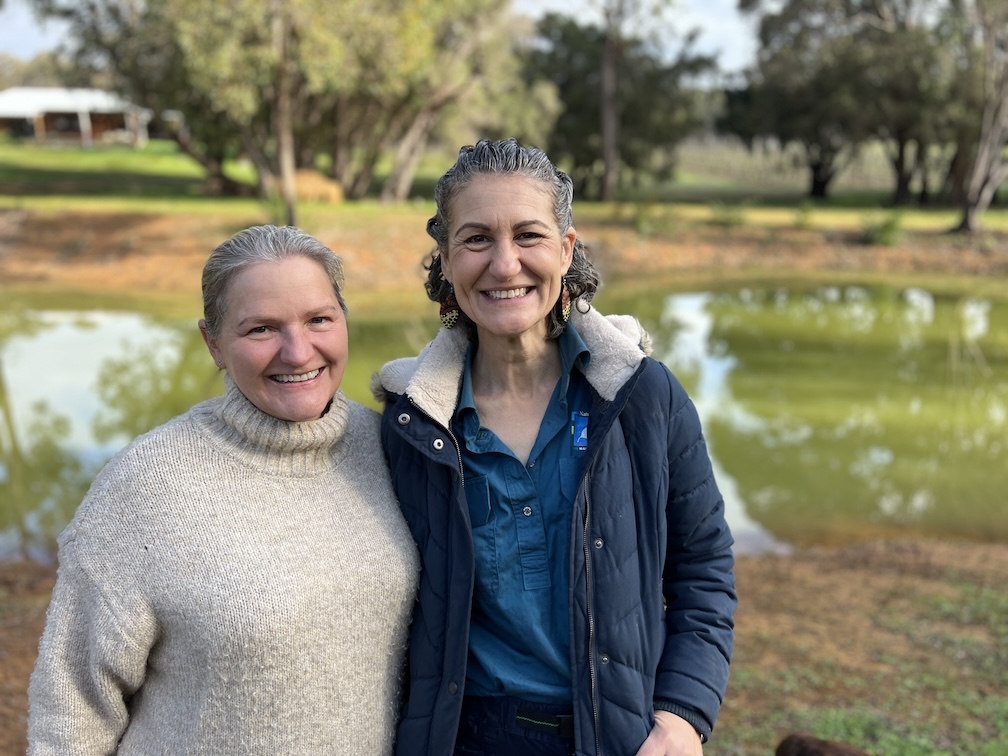
Jill O’Callaghan from Island Brook with Ellie Ward
Part of a broader program to restore biodiversity to dams
Island Brook Estate is one of three Margaret River demonstration sites in the broader WAWSAP dam and riparian rehabilitation project, alongside Xanadu Wines and Margaret River Senior High School Farm, with a further three sites in the Great Southern wine region.
The sites will provide practical examples of how agricultural landholders can improve water security, biodiversity and climate resilience, with lessons shared through field days, workshops and an online knowledge hub.
The WA Wine Sustainability Advancement Program (WAWSAP) is a nine-partner consortium initiative led by Wines of Western Australia, supported by the Australian Government through funding from the Climate-Smart Agriculture Program under the Natural Heritage Trust, and enabled by the Western Australian Wine Industry Partnership – an industry-led initiative supported by the WA Government.